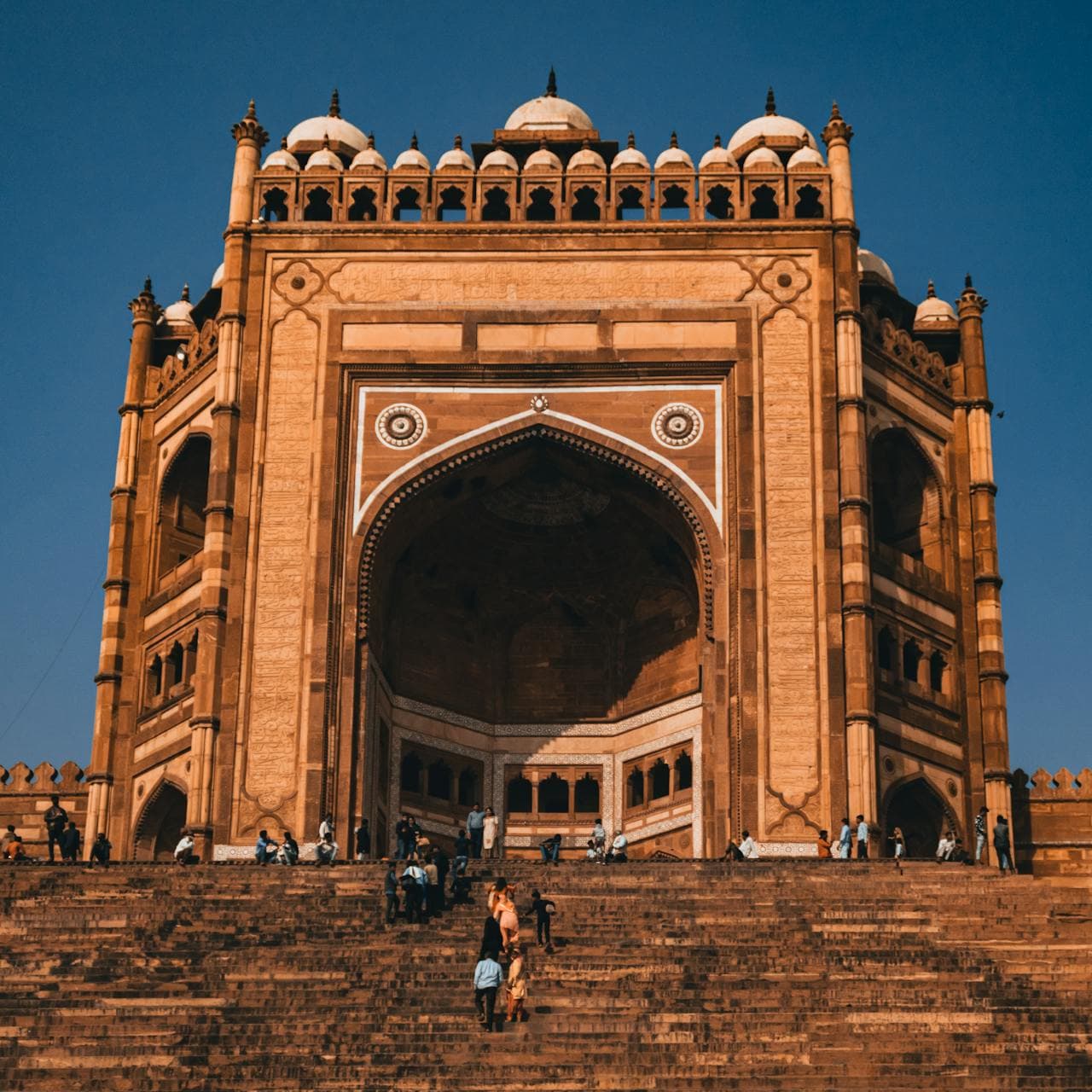
An iconic heritage Of Fatehpur Sikri
Buland Darwaza
The Arch of Imperial Glory
"Gate of Magnificence"
One of the most imposing architectural achievements of the Mughal Empire, standing as the highest gateway in India and one of the grandest in the world.
Historical Background
Built during the reign of the Mughal Emperor Akbar, Buland Darwaza stands as a testament to his military victories, political ambitions, architectural vision, and ideology of tolerance.
In 1601 AD, Akbar ordered the construction of Buland Darwaza to celebrate his successful conquest of Gujarat — a major center of trade, wealth, and maritime power.
Bringing Gujarat under Mughal control was a turning point in Akbar's expansion strategy, marking a significant milestone in the empire's westward expansion.
The Gateway Symbolized
- ✦Mughal supremacy
- ✦Political stability
- ✦Akbar's undisputed authority
- ✦The empire's westward expansion
The structure served both political propaganda and architectural grandeur.
Architectural Grandeur
54m
Height (177 feet)
40m
Width
42
Steps to Entrance
Materials
- ◆Red sandstone
- ◆Black and white marble inlay
- ◆Intricate carvings & calligraphy
The design blends Persian, Indian, and Central Asian architectural elements.
Key Design Features
- ◆A massive central archway
- ◆Symmetrical domed kiosks (chhatris)
- ◆Calligraphy containing Quranic verses
- ◆Persian inscriptions praising Akbar's reign
- ◆Floral & geometric stone carvings
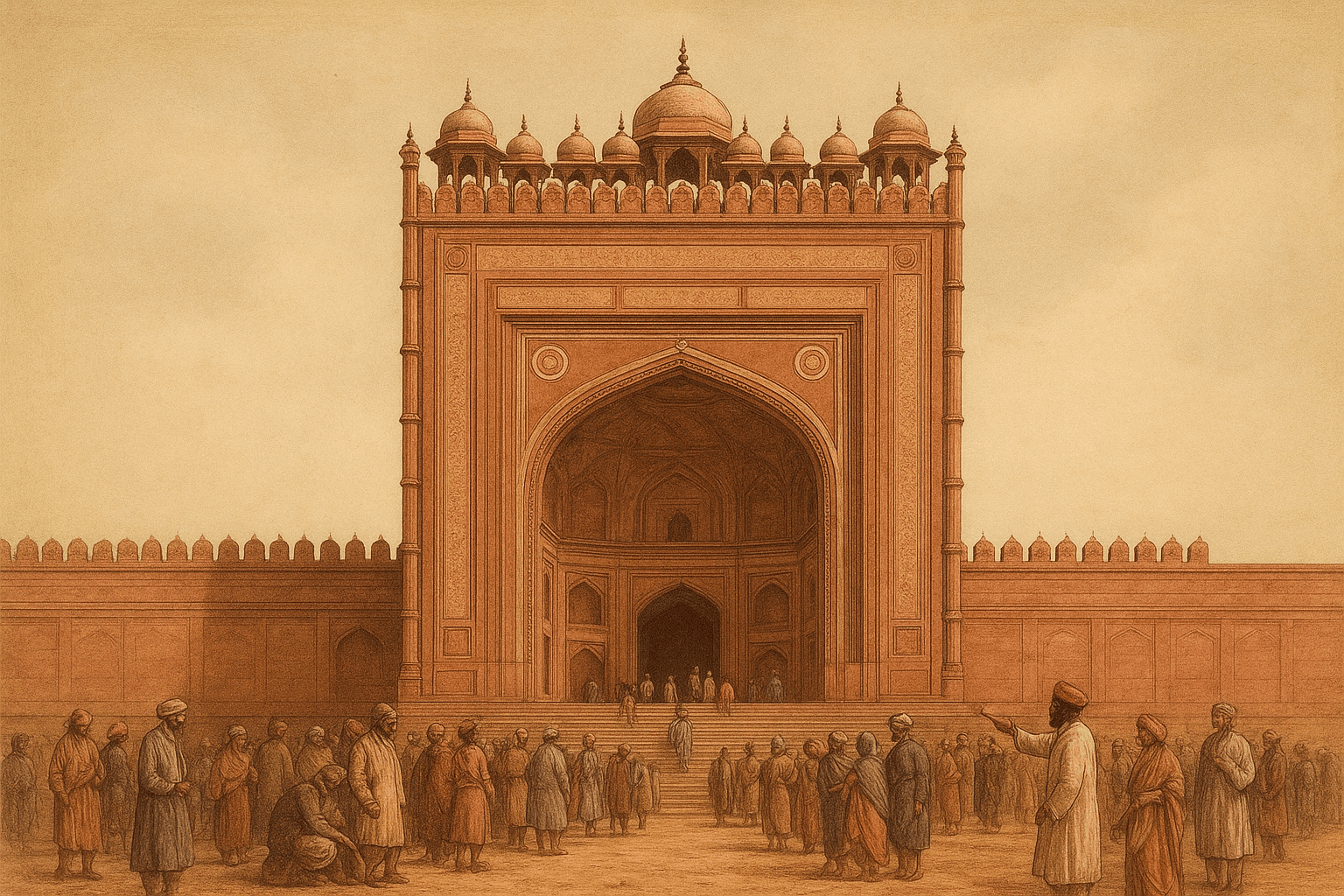
The gateway's commanding presence was meant to awe visitors entering Fatehpur Sikri.
Historical Significance
Political Symbol
The gateway symbolized:
- ▸Mughal power
- ▸Consolidation of western India
- ▸Akbar's imperial ambitions
Architectural Innovation
It pushed Mughal architectural boundaries with:
- ▸Mega-scale structures
- ▸Fusion of Persian + Indian styles
- ▸Precision in stone inlay and calligraphy
Cultural Vision
The inscriptions and artistic elements reflect Akbar's interest in:
- ▸Interfaith dialogue
- ▸Philosophy
- ▸Universal ethics
Urban Planning of the Mughals
Buland Darwaza was integral to the organized urban design of Fatehpur Sikri, which demonstrated the Mughals' advanced planning skills.